Breakdown of Costs Every Florida Real Estate Seller Should Know
Breakdown of Costs Every Florida Real Estate Seller Should Know
Selling your Florida home is exciting—but it’s also a financial transaction with many moving parts. To avoid surprises and protect your profit, you need to understand exactly what costs you’re responsible for as a seller.
Here’s a complete breakdown of the most common expenses you’ll face—and how to prepare for them.
1. Real Estate Commission
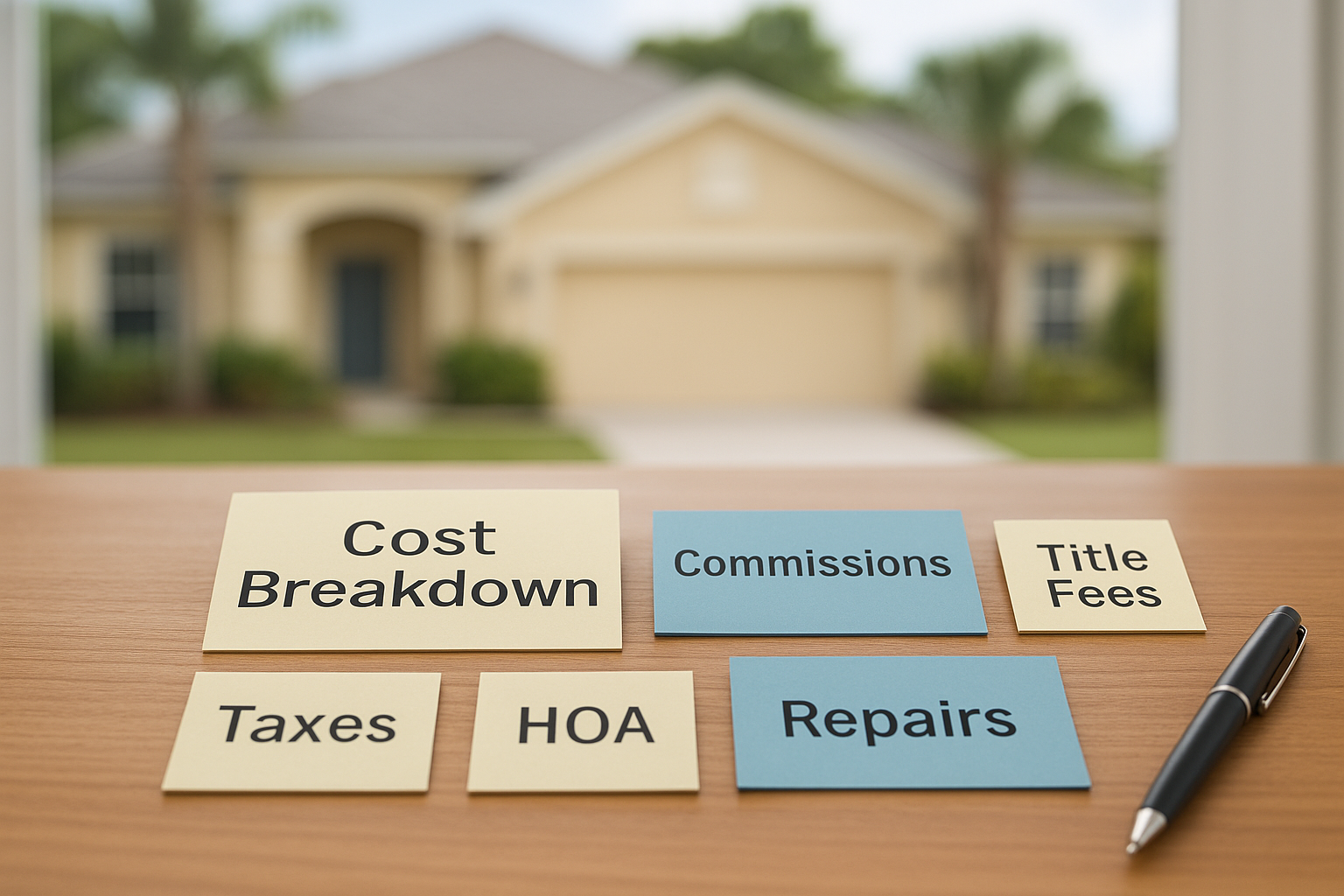
This is often your largest cost. In Florida, sellers typically pay 5–6% of the sale price, which is split between the listing and buyer’s agents. This fee covers marketing, negotiation, showings, contract management, and more.
2. Title Insurance (Owner’s Policy)
In most parts of Florida, the seller pays for the buyer’s title insurance, which protects the buyer from undiscovered title issues. Cost is based on the sale price, but expect $1,000–$3,000+ for an average home.
3. Documentary Stamp Tax
Florida charges a state transfer tax—commonly known as doc stamps—on all real estate sales. Rate:
- $0.70 per $100 of the sale price (or $0.60 in Miami-Dade County)
Example: $500,000 sale = $3,500 in transfer taxes.
4. Title Company / Closing Agent Fees
Whoever handles your closing (title company or attorney) will charge processing or settlement fees. These vary by provider and region but are usually $500–$1,500.
5. Prorated Property Taxes
You’ll be responsible for paying your share of property taxes up to the closing date. These are calculated per diem and subtracted from your net proceeds at closing.
6. HOA Dues or Estoppel Fees
If your property is in a community with an HOA, you’ll likely pay:
- Estoppel fees (certificate from HOA)
- Prorated dues up to the closing date
Typical estoppel fees: $200–$500
7. Mortgage Payoff / Liens
Any remaining mortgage balance or liens on your property must be satisfied before closing. Your title company will request final payoff figures from your lender(s).
8. Repair Credits or Concessions
You may agree to provide a credit for repairs following the inspection. Alternatively, you might agree to cover a portion of the buyer’s closing costs.
9. Optional Costs to Consider
- Pre-listing inspections or repairs
- Home warranty (if offering to buyer)
- Professional staging or photography
- Deep cleaning or curb appeal upgrades
These can enhance saleability but should be weighed against potential return.
Why Work With a Local Expert?
Michael Renick and Team Renick – Mangrove Realty Associates Inc. have deep experience navigating every type of Florida seller expense—from basic to unexpected. They’ll help you understand what to expect, what’s negotiable, and what’s truly necessary to close the deal with confidence.
When Is the Best Time to Sell a Home in Florida?
📣 Let’s Talk Strategy
Want a clear breakdown of your numbers and a smarter way to sell? Let’s connect.
- 📞 Call Mike: 941.400.8735
- 📍 Explore our blog series: The Florida Life
- 🌐 Learn how we operate and why it matters: TeamRenick.com
- 🔎 Start your property search: Search.TeamRenick.com