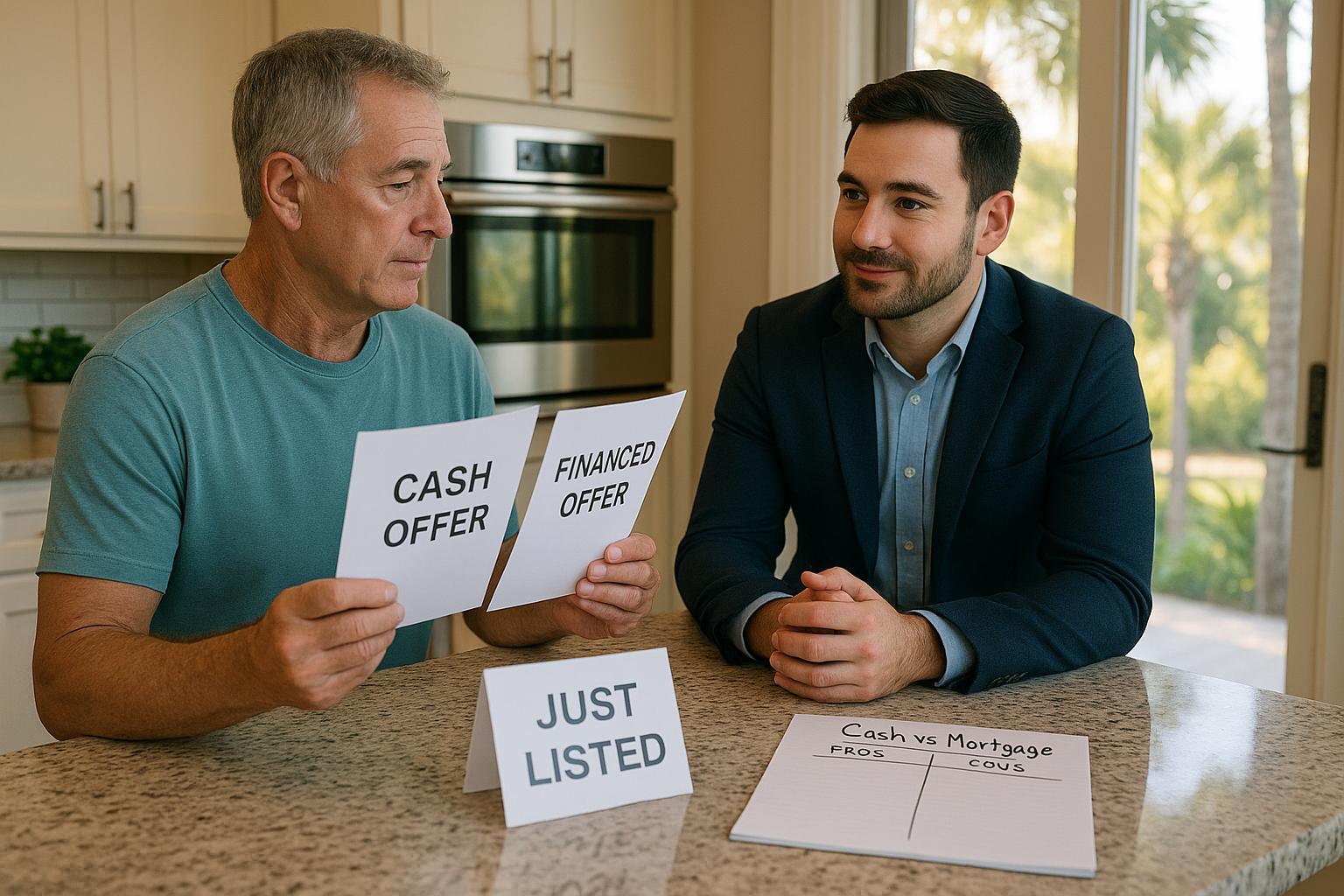
How Team Renick Guides Big Decisions
How Team Renick Guides Big Decisions
Quick Answer
Team Renick guides big real estate decisions by turning uncertainty into a clear decision path—what matters most, what to ignore, and which next step protects your timeline and money before you commit momentum.
- Start by defining the outcome: net, timeline, certainty, or flexibility.
- Identify the 2–3 decisions that control the result in your situation.
- Compare options against live competition and real buyer behavior.
- Run a risk scan early (inspection, appraisal, financing, timing).
- Use decision rules so choices don’t get emotional under pressure.
- Plan negotiation before it’s needed, not after problems show up.
- Choose the smallest action that produces the biggest clarity next.
- Keep communication tied to milestones and upcoming decisions.
Big Decisions Feel Hard Because the Stakes Are Real
Real estate decisions rarely live in a vacuum. They’re connected to job changes, family needs, retirement plans, relocations, and financial goals. When the stakes are high, “more information” doesn’t always help—clarity does.
Serving Sarasota & Manatee Counties since 2011, Team Renick has worked with clients who needed a steady plan under pressure. The goal is to make the next decision obvious, reduce avoidable risk, and keep you in control of outcomes you can’t easily redo.
Mike and Eric are amazing! They are professional, great listeners, helpful and so accommodating no matter what time it is. Most importantly they are honest and not pushy. If you are in the market to buy or sell Team Renick is a must!!
– Just Because, Google Review
The Most Common Big Decisions Clients Face
Sell now or wait?
This decision usually isn’t about predicting the entire market. It’s about your timeline, your alternatives, and whether waiting improves your outcome or simply delays a necessary move.
Price for a premium or price for certainty?
Sellers often wrestle with how aggressive to be. Buyers wrestle with how competitive to be. The right strategy depends on risk tolerance and the strength of current competition in your segment.
Choose the “nice home” or the “right location”?
Clients frequently compare a bigger home in a weaker location versus a smaller home in a better one. The right answer depends on lifestyle priorities, resale reality, and what compromises you can live with daily.
What Changes When Decision Guidance Is Real
Trade-offs are made explicit
Most regret comes from hidden trade-offs. When you see the trade-offs clearly—cost vs. certainty, speed vs. maximum net, protection vs. competitiveness—decisions feel calmer and more intentional.
You stop reacting to noise
Online headlines and opinions can push clients into impulsive moves. Grounding decisions in live competition, buyer behavior, and your constraints helps you ignore the noise and focus on what matters.
Team Renick Big Decision Framework
This framework is used to guide decisions that feel high-stakes. It keeps the process structured and prevents “analysis paralysis” without pushing clients into rushed choices.
1) Outcome Definition
We define what you’re optimizing for: net, timeline, certainty, or flexibility. This becomes the compass for every decision that follows.
2) Constraints and Non-Negotiables
We identify real-world constraints: move dates, travel schedules, purchase deadlines, showing limitations, repair tolerance, and financial comfort zones. These constraints shape strategy more than most market headlines do.
3) Live Competition Reality
We compare your home (or your target homes) against what buyers can choose today. This reveals where leverage exists and where the market is likely to push back.
4) Risk Scan Before Commitment
We identify likely risk points: condition concerns, water signals, roof/system age, inspection themes, appraisal sensitivity, financing strength, and timing conflicts. This prevents expensive surprises after emotions are involved.
5) Decision Rules and Next Steps
We define decision rules: what would change your mind, what triggers a strategy adjustment, and what “good signals” look like early. Then we map a clear next step so momentum is intentional.
Mike took the time to understand what type of home I was looking for. When I wasn’t clear, he probed even deeper. The end result….when I saw listings, they were the ones that fit my criteria. We didn’t waste our time chasing around looking at homes that were of no value to me! Mike took the time to explain, right up front, how the buying process would work. He clearly knows his stuff! If you are looking for a Broker that understands his job and places his clients above all else, Mike is the one for you. I feel like I’ve not only found an exceptional broker but also a good friend.
– Sue Lear, Google Review
How This Helps Sellers Make Big Choices
Choosing a list date with less stress
Sellers often feel stuck between “not ready yet” and “we need to move.” Decision guidance clarifies what must happen before listing and what can be handled during the process without sacrificing leverage.
Choosing a pricing strategy they can defend
A confident seller can defend their price with logic—competition, condition, buyer behavior—and knows what signals would prompt a change. That confidence reduces panic price cuts later.
How This Helps Buyers Make Big Choices
Choosing when to act
Buyers often worry they’ll buy at the “wrong time.” A better question is whether the home fits their life and budget, and whether the deal structure protects them. Decision guidance helps buyers act when the right opportunity appears.
Choosing an offer posture
Competitive offers don’t have to be reckless. Buyers can choose terms that improve certainty while keeping smart protections in place. A plan prevents the common mistake of swinging between overly aggressive and overly hesitant.
What Big Decisions Usually Come Down To
One or two controllable levers
Most outcomes are controlled by a small number of levers: price positioning, preparation, access, and negotiation posture for sellers; neighborhood fit, risk control, and offer structure for buyers.
Reducing avoidable regret
Good guidance doesn’t guarantee perfection. It reduces avoidable regret by making trade-offs explicit and planning for the predictable pressure points.
Where Team Renick Serves Florida Clients
Serving Sarasota & Manatee Counties since 2011.
Coastal & Barrier Islands:
- Longboat Key
- Lido Key
- St. Armands Circle
- Anna Maria Island
- Holmes Beach
- Bradenton Beach
Mainland & Surrounding:
- Sarasota
- Osprey
- Venice
- Bradenton
- Lakewood Ranch
What I Tell Clients Before They Risk Money
- Start by defining what success means (net, timeline, certainty) because strategy depends on the outcome you’re optimizing for.
- Make trade-offs explicit; regret usually comes from surprises, not from informed choices.
- Run a risk scan before you commit emotionally—condition and timing surprises are expensive.
- Use decision rules so pressure doesn’t drive impulsive moves during offers and negotiations.
- Choose the next step that creates the most clarity; clarity is how you stay in control.
Let’s continue this conversation.
If you’re facing a big decision—buying, selling, or timing your next move—I’ll help you map the trade-offs and next steps so you can act with confidence.
Call 941.400.8735 or Schedule a Call
Questions Clients Actually Ask
How do you help me decide between two homes?
We compare them against your non-negotiables, total monthly reality, neighborhood fit, and the risks that won’t show up in photos—condition signals, inspection sensitivity, and resale factors. Then we make trade-offs explicit so the “right” choice becomes clear.
How do I know if I’m overthinking this?
If you have the key facts and the decision still isn’t moving, you may be missing a clear outcome priority or a decision rule. Once we define what you’re optimizing for and what would change your mind, decisions usually get simpler and faster.
What To Do Right Now
Write down your timeline, your top three priorities, and the two trade-offs you refuse to accept (for example: “long commute” or “major repairs”). Then list what you need to see to feel confident: a price range, a neighborhood short list, or a risk scan on a specific property. With that, you can make the next decision step clear and move forward without guessing.
Get my weekly Market Update — a quick snapshot of what’s changing and how it affects decisions, leverage, and timing. Subscribe here
Michael Renick · Licensed Florida Real Estate Broker
License #BK3241900 · Verify on Florida DBPR
Mangrove Realty Associates Inc / Team Renick · Serving Sarasota & Manatee Counties since 2011
To learn more about Michael and Team Renick:
To search for local properties:
https://search.teamrenick.com/
To read more about what Michael shares with his clients: