How Do You Read a Florida Purchase Contract?
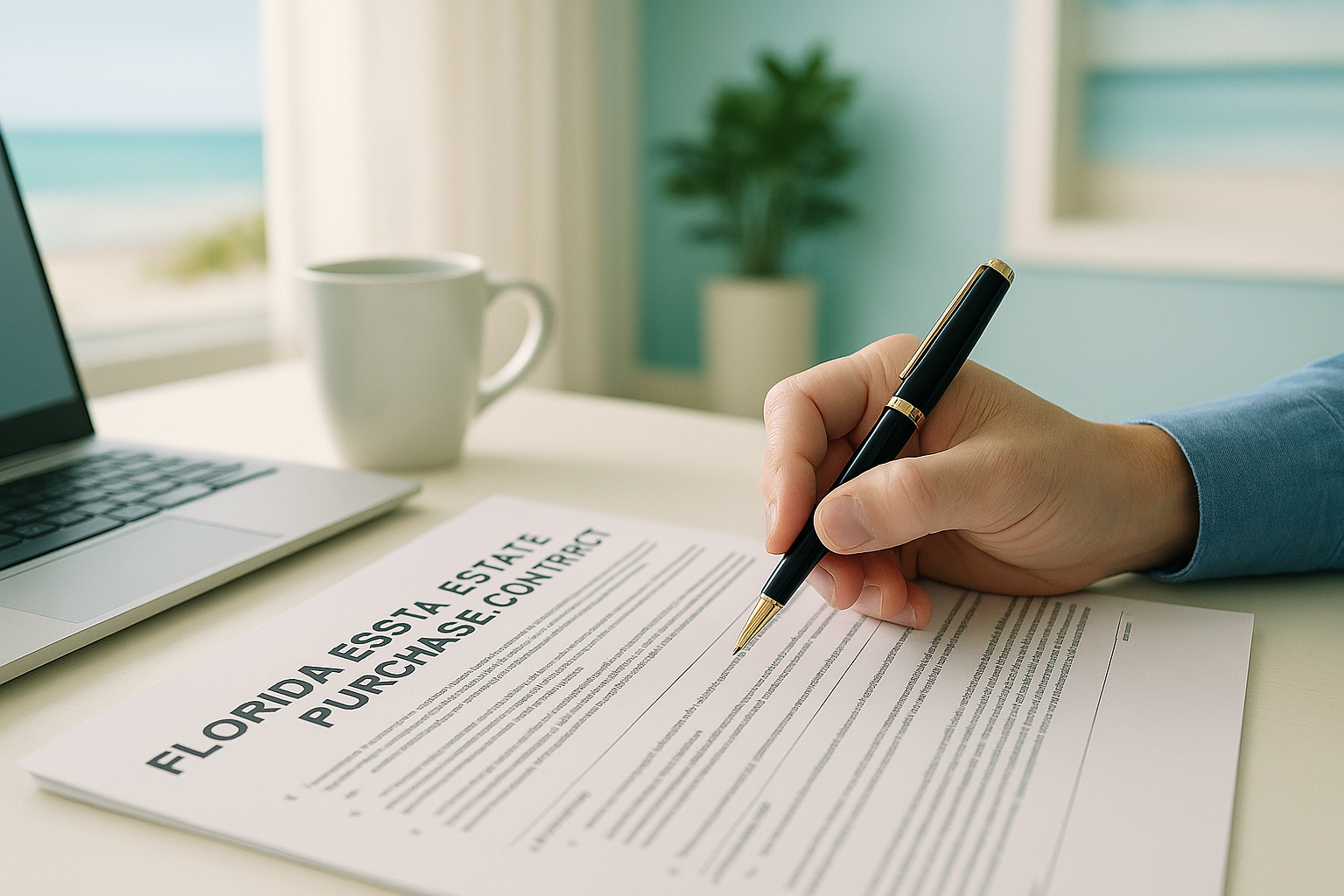
Florida real estate purchase contracts are legally binding documents that establish every term of your transaction — price, timeline, contingencies, and what happens if either party defaults. Most Florida transactions use the Florida REALTORS/Florida Bar “AS IS” Residential Contract for Sale and Purchase. Key sections to understand include the inspection period (typically 15 days), financing contingency, deposit structure, and the difference between AS IS and standard contracts. Never sign what you don’t understand — the right agent walks you through every line. For detailed information, please call Michael Renick.
The Standard Florida Contract: What It Is and Why It Matters
Florida uses two primary residential purchase contract forms developed jointly by Florida REALTORS and the Florida Bar:
- The “AS IS” Residential Contract for Sale and Purchase — The most commonly used form. The seller makes no obligation to repair anything, but buyers retain the right to inspect and cancel during the inspection period for any reason.
- The Standard Residential Contract for Sale and Purchase — Less common. The seller agrees to maintain the property in its current condition and may be obligated to make repairs up to a negotiated dollar limit.
In Sarasota and Manatee County practice, the AS IS contract is overwhelmingly preferred by sellers and is standard in the vast majority of transactions. Understanding this form thoroughly protects buyers from common pitfalls.
Section-by-Section Breakdown of the Florida AS IS Contract
1. Purchase Price and Deposit Structure
The contract specifies the full purchase price, the initial deposit (due within 3 days of effective date, typically 1–3% of price), and any additional deposit (due after the inspection period expires, often bringing total deposits to 5–10%). The escrow holder is named — almost always the title company or closing attorney.
Critical detail: deposits are generally non-refundable once the inspection period has expired, except in specific circumstances spelled out in the contract (financing failure, title defects, etc.).
2. Closing Date
Florida contracts specify a closing date — typically 30–45 days from acceptance for financed transactions, potentially shorter for cash deals. The contract includes provisions for extensions if financing or title issues arise, but extensions require mutual agreement. If a party can’t close by the specified date without an extension, the other party may have remedies including cancellation or claiming damages.
3. Inspection Period (Critical for Buyers)
This is arguably the most buyer-protective provision in the Florida AS IS contract. The standard inspection period is 15 calendar days from the effective date (the date both parties have signed). During this window, buyers can:
- Order any inspections they wish (home, septic, mold, wind mitigation, 4-point, roof, etc.)
- Cancel for any reason and receive their deposit back
- Request repairs, credits, or a price reduction based on inspection findings
After the inspection period expires, canceling the contract typically results in forfeiture of the deposit to the seller (with some exceptions). Never let the inspection period expire without making a conscious decision to proceed.
4. Financing Contingency
If you’re obtaining a mortgage, the contract includes a financing contingency. If your loan is denied through no fault of your own and you properly follow the contract’s notification procedures, you may be entitled to receive your deposits back. The contingency typically expires a set number of days before closing — after which you’re expected to close regardless of financing status.
This is why getting a solid pre-approval (not just pre-qualification) before making offers is essential. A lender who issues a pre-approval letter that later doesn’t hold up puts your deposit at risk.
5. Title and Closing Costs
Florida buyers and sellers each have customary closing cost responsibilities. In Sarasota and Manatee Counties, the seller customarily pays for the owner’s title insurance policy — though this is negotiable. Buyers typically pay for their lender’s title policy, recording fees, and loan-related costs. Your agent will outline who pays what in your offer.
The contract also specifies how title will be conveyed (warranty deed) and sets standards for title search, clearing of liens, and acceptable title exceptions.
6. Property Condition, Disclosures, and Addenda
The Florida AS IS contract requires sellers to disclose known material defects — facts that would affect the value or desirability of the property to a reasonable buyer. However, the AS IS structure means sellers aren’t obligated to fix what they disclose. Buyers must factor disclosed issues into their inspection-period decision.
Common addenda include:
- Condominium/HOA rider (required for all HOA transactions)
- Flood zone disclosure
- Lead-based paint disclosure (for homes built before 1978)
- Seller’s property disclosure (not required in AS IS but often provided)
- Financing addendum with specific loan terms
Key Deadlines You Cannot Miss
Florida contracts are deadline-driven. Missing any of these can have serious financial consequences:
- Initial deposit: Due within 3 business days of effective date
- Inspection period end: Typically day 15 — your last chance to cancel without penalty
- Additional deposit: Due at inspection period end (or as specified)
- Loan approval deadline: Usually a set number of days before closing
- HOA/condo document review period: 3 days after receiving documents to cancel
- Closing date: Must close by this date or risk default
A competent agent tracks every deadline for you and sends reminders — this is not optional service, it’s core to the job.
What Happens If Something Goes Wrong?
If the buyer defaults (fails to close without a valid contractual reason), the seller’s typical remedy is to retain the deposits as liquidated damages. In some cases, sellers can pursue specific performance — forcing the buyer to complete the transaction — though this is less common.
If the seller defaults (refuses to close or backs out without justification), the buyer can pursue return of their deposits plus potentially sue for specific performance or damages.
This is why working with a real estate attorney for review — or at minimum understanding every clause before signing — is strongly recommended for complex transactions.
Use our mortgage calculator to estimate your complete monthly payment — principal, interest, taxes, insurance, and HOA — for any Sarasota or Manatee County property.
Questions Clients Actually Ask
What is the difference between AS IS and standard Florida contracts?
In an AS IS contract, the seller makes no obligation to repair anything discovered during inspection. Buyers still have the right to inspect and cancel within the inspection period — but if they proceed past that window, they’re accepting the property in its current condition. The standard contract obligates the seller to maintain the property and potentially repair items up to a negotiated limit. In practice, nearly all Sarasota and Manatee County transactions use the AS IS form.
Can I get my deposit back if I cancel during the inspection period in Florida?
Yes — if you cancel within the inspection period, you’re generally entitled to a full refund of your deposit. The Florida AS IS contract gives buyers an “out” for any reason during the inspection window. After the inspection period expires, deposit refundability depends on which specific contingency (if any) covers your reason for canceling.
Do I need a real estate attorney to buy a home in Florida?
Florida does not legally require buyers to use a real estate attorney, but it is strongly recommended for complex transactions — particularly condos, investment properties, or situations involving estate sales, short sales, or title issues. A Florida real estate attorney typically charges $500–$1,500 for a transaction review and closing. For standard residential transactions, a knowledgeable agent and a reputable title company can handle most closing needs.
What disclosures is a seller required to make in Florida?
Florida law requires sellers to disclose all known material facts that would affect the property’s value or desirability to a reasonable buyer and that are not readily observable. This includes structural issues, history of flooding, HOA problems, pending assessments, and any other defects. Florida does not have a mandatory seller’s disclosure form — but failure to disclose known defects can expose sellers to legal liability even after closing.
How long is the typical closing timeline in Florida in 2026?
For financed purchases, 30–45 days from contract to closing is standard in Sarasota and Manatee Counties. Cash transactions can close in 10–21 days in most cases. Delays can occur due to title issues, lender processing times, condo approval requirements, or HOA document reviews. Working with a lender who commits to a timeline and a title company with local expertise minimizes closing delays.
What To Do Right Now
Get my monthly Market Brief — I track what’s actually happening in Florida: pricing, inventory, insurance problems, and deals falling apart. Sign up here.
Michael Renick · Licensed Florida Real Estate Broker
License #BK3241900 · Verify on Florida DBPR
Mangrove Realty Associates Inc / Team Renick · Serving Sarasota & Manatee Counties since 2011