Sarasota & Manatee Counties
Downsizing Your Florida Home
A smaller home can mean fewer rooms to maintain, less yardwork, and more freedom to travel. But fewer square feet don’t automatically mean lower expenses—or an easier move.
Whether you’re moving from a larger house to a smaller home, changing condos, or trading a house for condo living, downsizing starts with deciding what fits your next chapter. Team Renick at Mangrove Realty Associates Inc. helps buyers and sellers navigate that transition throughout Sarasota and Manatee counties.
Discuss your plans · 941-400-8735
Team Renick — Mangrove Realty Associates Inc.
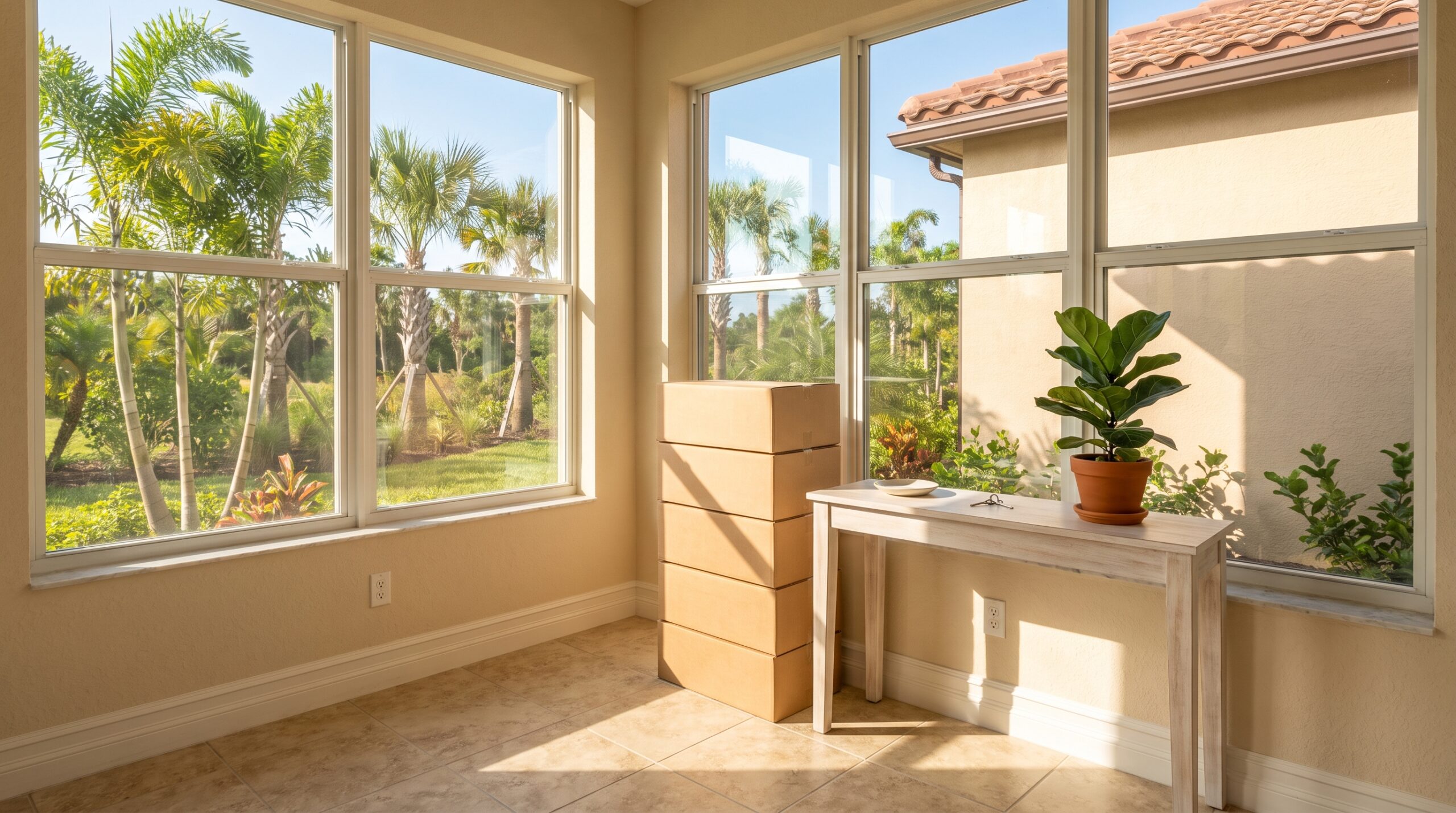
Start with what you want your next home to change.
Perhaps you’re tired of maintaining a pool. You want to spend less time on repairs, live closer to family, or have a place you can leave for several months without managing a house from a distance.
Those priorities matter more than a square-footage target.
A smaller house may leave you responsible for the roof, yard, and pool. A smaller condo may offer less space without lower association fees. Moving from a house to a condo changes which responsibilities you manage yourself and which you share with other owners.
Before narrowing the search, identify what you want to give up—and what you need to keep. Room for visiting family, suitable pet rules, convenient parking, accessible living spaces, and room for a home office can matter more in daily life than square footage alone.
Three ways to downsize. One goal: a better fit.
Downsizing can mean less space, fewer responsibilities, or a layout that works better for your everyday life. The right property depends on what you want to change.
Larger house to smaller house
Keep the privacy and independence of a house while reducing the space you maintain. Compare the layout, storage, yard, and upkeep—not just the number of bedrooms.
A smaller house may still involve roof repairs, landscaping, pool care, and association obligations. Make those responsibilities part of the comparison.
Larger condo to smaller condo
Choose a unit that better fits the way you live now. Consider guest space, storage, parking, accessibility, and which amenities you actually use.
Compare the two associations as well as the two units. Less square footage does not guarantee lower fees, fewer assessments, or lower total ownership costs.
House to condo
Trade some individual property-maintenance responsibilities for shared building and community responsibilities.
Review association finances, insurance, rules, and building condition alongside the unit itself. Decide whether that combination fits your budget and lifestyle.
Compare the money you’ll have with the costs you’ll take on.
The asking price of your current home is not the amount you’ll have available for your next purchase. Likewise, the price of a smaller house or condo doesn’t tell you its full ownership cost.
Use this comparison before committing to either transaction:
| Decision | What to establish |
|---|---|
| Proceeds from the current home | A realistic sale-price range, less mortgage payoff, selling expenses, and any agreed concessions. |
| Cash needed for the next purchase | Down payment or purchase funds, closing expenses, moving costs, and money retained for unexpected expenses. |
| Recurring ownership expenses | Property taxes, insurance, utilities, maintenance, and any HOA or condo fees. Include applicable CDD charges and separate parking, storage, or amenity charges. |
| Who handles the upkeep | For a house, budget for the roof, exterior, yard, and pool where applicable. Where an association is involved, establish what its fees cover and what remains your responsibility. |
| Potential additional expenses | Property repairs, replacements, and planned projects. For an association property, also review assessment information and the association’s financial and building records. |
| Property-tax reassessment and portability | What will property taxes look like after the purchase? Ask the county property appraiser whether you qualify to transfer a Save Our Homes assessment benefit, what amount may transfer, and which homestead and portability applications and deadlines apply. Do not assume the seller’s current tax bill will be yours. |
| Insurance for the next property | Get property-specific insurance quotes, including wind and flood coverage as appropriate. Ask your insurer whether a wind-mitigation inspection would affect eligibility or pricing, and confirm coverage and deductibles before committing. |
| Tax implications of the sale | Ask your tax adviser whether the primary-residence gain exclusion applies and whether any potential tax liability affects the funds available for your next purchase. |
| Costs between homes | Temporary housing, storage, or carrying both properties if the dates don’t align. |
The purpose is to compare two realistic ownership situations. A lower purchase price may still come with monthly expenses that don’t fit your plans.
Official guidance: Florida Save Our Homes portability and IRS guidance on selling your main home. Confirm your property-specific position with the county property appraiser and your tax adviser.
Team Renick can help organize the property and transaction questions. Your lender, insurance professional, and tax adviser should confirm the figures within their respective areas.
Should you sell first or buy first?
There isn’t one sequence that works for everyone. The right choice depends on your available funds, financing, flexibility, and the properties involved.
Sell first
This can clarify your available proceeds before you commit to the next purchase.
The tradeoff: You may need temporary housing and storage if the right next home isn’t available when your sale closes.
Buy first
This can give you time to move before preparing the current home for sale.
The tradeoff: Carrying two properties and committing funds before you know the final sale proceeds. Confirm affordability and financing first.
Coordinate closings
This may reduce the gap between homes, but it requires careful planning.
The tradeoff: A delay in one transaction can affect the other. Occupancy arrangements, contingencies, and backup plans must be agreed upon—not assumed.
Team Renick helps you evaluate the sequence before the dates become contractual commitments.
If your next home is a condo, look beyond the unit.
Whether you’re leaving a house or moving from a larger condo to a smaller one, a well-presented unit is only part of the purchase. You’re also choosing a building, an association, and a set of shared responsibilities. A smaller unit in another building may have higher fees or different financial obligations than the home you’re leaving.
- What do the budget, financial statements, and reserve information show?
- Are assessments approved, or are major projects under discussion?
- What inspection reports and maintenance records are available?
- What insurance information should your insurer and lender review?
- Do the rules fit your plans for pets, guests, rentals, vehicles, and renovations?
- Will the parking, elevators, storage, and layout work for your everyday needs?
Michael Renick’s experience in condominium association leadership informs the questions Team Renick helps clients raise. Property inspections and specialist advice remain separate parts of the evaluation.
Prepare the current home with the next move in mind.
Before spending money on improvements, establish what competing properties offer and which issues are likely to affect buyers’ decisions.
Separate necessary repairs from optional cosmetic work. Then build a manageable plan for photographs, showings, and the belongings that won’t be moving with you.
A floor plan of the next home can help make those decisions concrete. Measure the furniture you want to keep. Check storage, doorways, stairs, and any elevator access. Decide what needs to be moved, donated, sold, or stored before closing week arrives.
The objective is a market-ready home and an organized move—not a renovation undertaken without a clear reason.
What if the move also involves another state?
Selling locally and relocating elsewhere—or selling elsewhere before buying here—adds another layer of coordination.
Team Renick’s relocation services include video showings, inspection scheduling, and remote-closing coordination through a Florida title company. The sale, purchase, travel, and moving schedules still need a shared plan.
Your next step
Start with a conversation about both homes.
You don’t need to have your next home selected or your current house or condo ready for photographs. Bring three starting points:
- The address of your current home
- The budget you’re considering for the next property
- Your preferred timing
From there, the conversation can focus on the sale, the search, and the decisions that need to happen first.
941-400-8735
Team Renick
Mangrove Realty Associates Inc.
